The alarming information from South Africa about a substantially more contagious variant of COVID is bumping up against very human disaster fatigue.
There is a bunch of wishing that the new variant is less dangerous, and it is possible it will be found to be - but the most likely is that the virulence is unchanged, or not dramatically changed.
There is also a lot of wishing the vaccines remain effective. Again, it’s unknown, but the substantial number of mutations make it seem very possible immunity will be weakened.
Some estimates of R(t) in SA are 1.2 for Delta and >3 for Omicron. This implies that the public health controls in place produce a result similar to when COVID was first circulating, with zero controls - and the concern was for overwhelmed healthcare.
If the new variant is equivalently virulent, but much more contageous, the risk of over whelming health resources is real, even in highly vaccinated populations, as even a small percentage of the population ill at the same time could easily be a disaster. Note this remains true even if the disease in the variant is less severe. A halved virulance but quadrupled infection rate is still doubled hospitalisation, and more as the case numbers grow exponentially.
There are some clues that natural immunity from a prior infection is less effective against this variant. This would be very bad in areas which have already suffered from earlier waves.
There are some hopes the hospitalisation rate is lower. Unfortunately, there is also an indication that many of the early cases in hospital were there for other reasons. If you go to hospital with a broken leg and flu symptoms it seems quite predictable that you will leave earlier than somebody hospitalised because the flu symptons have progressed to serious respiratory illness. I think in the weeks to come as the stats about Omicron become dominated by those hospitalised as a result of the disease, we'll be better able to judge the seriousness of the illness.

In Australia, where we have, until a month ago, quarantined international arrivals, we have an opportunity to halt Omicron until the data on the variant is confirmed. Unfortunately, politicians are primed to hear the best news for themselves, so we are still accepting international travellers with a few days self isolation at home. We should note the NSW health minister admitted the self isolation was being frequently ignored.

I hope the new variant isn't terrbily contagious, but all evidence to date is that it is.
I hope the new variant doesn't evade immunity or vaccine immunity. There is very little evidence to date, though some clues reinfections are increased.
I hope the new variant is incredibly mild, and it 'chases out' previous dominant strains. There is no reliable evidence at all that this is the case, just hopes in my opinion.
I hope that a tailored booster vaccine could be developed swiftly. I have seen comments saying a couple of months is possible. I don't know if this is realistic, but with limited other options, we may depend on it.
I hope that the combination of extreme contagion, immunity escape and similar virulence don't lead to much death, a return to lock downs and the disruptions the world experienced last time a deadly disease infected many people - just last year.
But it looks like a real risk.

Our leaders should have reacted in a precautionary way, instead of waiting for the data to be in on whether the new variant is stronger/weaker or more/less contagious. But they failed to do so, so we are at the mercy of luck.

I'd say it will be clear in the days between Xmas and New Year whether we were lucky or not, so take care around vulnerable people and cross your fingers the politicians are right. And try not to make any plans for 2022 that a pandemic might ruin!
Uncategorized
What’s gone wrong at Google?
Google makes a lot of money from selling advertisers really specific access to likely customers.
They have been extraordinarily innovative in the way they do this, to the point where advertisers bid in real time to show you their wares and advert placement gets almost spooky when a product you discussed on the weekend shows up unbidden on your screen.
I’m not an idiot, so I don’t like any of this. I don’t like anybody, be they for profits, governments or a benevolent overlord peering so closely into my drivers and past activities that they can predict anything meaningful about my future behaviour.
I don’t buy the line that targeted advertising is better for everyone, if for no other reason than I have no belief vendors of a hotel room will give me the best rate if they know I have already booked non-refundable airfares.
But that isn’t my gripe with Google today.
I’m not so naïve that I think the ‘Don’t be evil’ motto lingers in any way, but I do like to think Google gives some consideration to how it behaves with my data, and what they might do with it.
A lot of people will argue they clearly failed this with the cancelling of Google Reader (a convenient way to manage headlines and articles from a large base of information sources like news sites and blogs) or the ill fated Google Plus nonsense.
These were clearly dumb moves, but in the last couple of weeks there have been fresh examples I rate as even dumber.
Firstly, and annoyingly for me, is the end of Google Music in preference for YouTube. I have nothing against YouTube. I battle through the advertising encrusted interface to watch an occasional video on replacing a stove element or a review of a new keyboard – content that still holds the promise of the early Internet where individuals would share freely information to make everyone’s life better.
But I will only watch an entertainment video there with the greatest reluctance. The site/app is gratingly unpleasant, with unwelcome advertising, and a UI designed to force the interactions the platform owners will allow, rather than what a viewer may want.
Suffice to say, I don’t want any more to do with YouTube.
My only use for Google Music was to store a bunch of music I own so that I can access it via a voice controlled hub in our kitchen. Why bother, would be a reasonable question, and the answer is that casting music via wifi to the speaker is unreliable, and not available from all the devices I want to use.
I understand for 80% of users, Spotify or Apple Music or YouTube or whatever streaming service gives enough music choice, but I really don’t want to just give up on some artists I quite like because they haven’t contracted to the right distribution system. And I would rather buy new music I like from the artists, in preference to spending with a platform that gives them only microcents per listen. Similarly, after buying Led Zep on cassette, vinyl and CD, you can excuse me if I would rather not pay them any more.
So audio streaming isn’t much use to me, and the YouTube service is painful to use. To top it off, I gather the voice activation function I use is only included if I pay for a premium subscription.
This is all fine, Google can do what it wants to make money, but this seems to me like layers of decisions that don’t benefit the customer piling up – in this case sufficiently for me to spend time both whinging about it, but also to bother to find a software solution somewhere like Plex or whatever to fix the underlying reliability irritants in the first place. I’ll update with what I find.
The second example was the silly posts on Google real online real estate in the form of an open letter that warned Google free services could ultimately be ended if they have to pay for access to news sites.
I’ve no truck with the wealthy media businesses in Australia who squandered their advantages to find themselves beholden to a government regulation to keep some revenue. That was just the worst sort of short term planning and failure of leadership. But I also don’t shed any tears for Google or Facebook having to licence some of the content they pass around and glean advertising revenue from. The Google response is tone deaf, and further shows Google has no interest in its customers best interests.
In any case, it is a good reminder to check where Google and others might have a little too much control of my data. In my case, Gmail and Google photos have become a little too essential, so I will add them to the list of services I need to build a better redundancy plan for – as the day will no doubt come when they stop being useful enough to put up with the down sides, just like YouTube.
More COVID-19
So a matter of hours after I post that the numbers don’t look credible, as if they were being constrained by a testing lab capacity issue or similar, China releases a big spike in infectious numbers and revealing they are now counting patients diagnosed but yet to be tested. It will be interesting to see if they change the reporting criteria for sites outside Hubei too.
It does reinforce this is an incredibly infectious virus, and illustrates how quickly business as usual health facilities reach their limits in a pandemic. Hopefully, the global response continues to be aggressive and effective.

Covid-19
The novel Coronavirus/Covid-19 outbreak that started in Wuhan is concerning.
It looks as though the virus is very contagious, and with a mortality rate higher than influenza – but with no vaccine or effective anti-viral treatment. What I am curious about are the figures being reported from China on infections and deaths.
For the past fortnight, infections have grown by a very regular number in the daily Chinese update. The figures don’t exhibit the variability you would expect to see in a normal distribution, and don’t reflect the growing infection totals. If they are accurate, the Chinese quarantine efforts have been spectacularly successful, yet fail with unexplained regularity. Hmm. Maybe there is a local limit in lab testing or other limitation which puts a daily ceiling on how many cases can be confirmed?
The last two days have seen figures released with a declining number of daily infections. Given the large population pool in Wuhan and the other major Chinese cities reporting infections, and the experience of cities like Singapore and Hong Kong, a decline infection growth strains credibility. I have seen a rumour stating only more severe cases are now being counted.
This is a concern if China has determined the economic impact of quarantine is greater than the increased illness and death a widespread outbreak would entail. If there is a lack of transparency, other governments might under rate the risk and severity of the illness, ultimately risking more exposure.
Hopefully, China has contained the outbreak, but it is disconcerting to watch figures that don’t reflect an expected path.
Some thoughts on blockchains and Bitcoin
I’m not a mathematician or Computer Scientist, but I like the elegance of a genuinely ne idea, so I’ve been watching the various block chain developments for a few years.
When BTC was under $30 I ran the numbers and figured my cost of power would never make mining profitable. When it spiked up over $100 I did the numbers again for cloud hosted mining, with the same result.
Now it is around $3000. Huh.
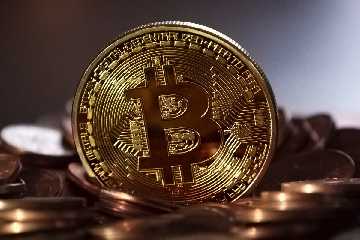
I think the blockchain currencies will end up being the less interesting part of the equation, unless you are using them to avoid Chinese currency controls, or deal drugs or something else you want to sell without a trail. The initial excitement was all about untraceable cash, but you can avoid taxes with cash today, and hold precious metals if you don’t want to be beholden to fiat currencies.
While bitcoin and other currencies (Doge, anyone?) are exciting in a speculative sense, and interesting in a fresh idea sense, they have a number of issues to be useful except in edge cases.
Number one for me is the energy use for mining and transaction processing. The algorithm that produces coins has increasing rarity built in, a bit like prime numbers in the real world, so to grow the bitcoin supply takes enormous energy – which could be used for productive purposes at less cost to things like climate change. This algorithm also ensures ongoing inflation, offering all the advantages of the gold standard in the 1970s…
Transactions also take energy to process, and there is debate at the moment on how to streamline this, but the current situation is that transactions are limited to around 7 per second, compared to VISA, for example, that typically handles thousands, and while there are ways to scale this, there are arguments against too – with the end result being a system that is less than ideal.
This combination suggests to me we’ll see examples of people ‘breaking’ the transaction system ‘for the lullz’, probably timed to coincide with bitcoin being launched for some legitimate, high profile system.
The other issue I’ll be interested to see merge is just how anonymous crypto currencies are. I don’t mean that there is a flaw in the implementation, but rather that privacy exploits will be developed that rely on meta data in the transactional record to breach anonymity. I don’t think this has happened yet, but I can imagine it being around the corner should transaction volumes grow enough that statistical methods can be applied to infer personal data from transaction patterns, timing, network origin etc.
In the future, I suspect the real action will be in Ethereum like block chain computational models, rather than currencies.
If you consider the blockchain mechanism as the underlying platform, then currency is just one application.
To draw an analogy, email was an early and cool application on the Internet, but the really innovative stuff that harnessed Internet technologies to make something with no real analog in the offline world came later, often much later.
When the Internet went mainstream in the early 1990s, there were plenty of people making a bit of money selling web hosting or writing client software, but much later the Googles and Facebooks arrived.
I think bitcoin is at the Alta-Vista or Hotbot level of maturity – people made plenty of money there but the world quickly moved on.
The Ethereal model is interesting, but there is little reason to use the Eth public coin (or, urgh, classic ETH), when you can host a completely separate fork for basically free. And less reason as the coin price rises.
So blockchain is real and useful. Coins are a valid application. They are a convenient current speculation, but like tulips or Hotbot shares, have little inherent worth. But the emerging applications might be very valuable.